The School Computer Burglary
Sonne und BetonThe School Computer Burglary is a night-time theft planned by Sanchez and carried out with Lukas and Julius at their school, the Gesamtschule in der Gropiusstadt. Its decisive turn is the discovery that the computers are really there: a scheme imagined as quick money becomes a physical operation involving a stolen key, a darkened school, a high fence, and equipment too conspicuous to move easily. The burglary also draws rapid public attention, while Lukas’s own account sets that attention against the violence he considers routine and largely ignored.
Causes and Planning
The opportunity begins with an announcement that the school will receive fifty new computers, complete with monitors, keyboards, and mice. Sanchez proposes stealing the equipment at night and selling it, presenting the plan as a route to several thousand euros for each participant. Julius immediately embraces the idea; Lukas questions both the decision to break into their own school and how they could get away with it. Sanchez’s answer is practical rather than elaborate: they will go in that weekend, at night.
Julius produces a lockpick and boasts that he can use it to open doors, cars, and basements. Sanchez dismisses the tool and throws down a large key ring. Julius recognizes the keys as belonging to the school, making access seem less like a technical challenge and more like an opportunity already in hand. The distinction matters: their plan depends not only on the value of the computers but on having a way into the building.
The night of the break-in, the group approaches a school set in a quiet residential area. The surrounding streets seem empty, and the lack of nearby places where people gather makes the boys feel conspicuous. Sanchez has kicked out a lamp by the school gate, leaving them in darkness. Before opening the gate, Julius reveals that he has brought a silver blank-firing gun, which he shows off and tucks back into his waistband. Lukas recognizes that carrying it could make an already serious burglary far more dangerous if they are caught.
Entry and Theft
Sanchez leads them through the gate and toward the school. At the side entrance to the seventh-year section, Lukas worries that they will pass the caretaker’s room and the cleaning-supply rooms, where someone might be working. Sanchez unlocks the door before Lukas can voice his concern. Inside, their footsteps echo down the dark corridor. Lukas tries to use a flashlight borrowed from his father, but it does not work; Julius illuminates the way with his phone instead.
They search the storage area, initially unable to see the computers. Sanchez finally spots unopened cartons on high shelves, with computers and screens visible on the boxes. Lukas climbs onto a step and passes the equipment down one piece at a time. Sanchez and Julius receive it and set it on the floor. The machines are small, but the computers are heavy; in the excitement, Lukas describes handling them as if in a trance.
The amount they take becomes a point of disagreement. Julius wants at least ten computers, but Sanchez warns that carrying too many through the streets would attract attention and make them more likely to be caught. Lukas counts what they have: eight computers and nine monitors. They settle on that load and try to move it through a window into a small group-work room, whose windows look onto the garden behind the school.
Getting the equipment out proves harder than finding it. Behind the school, the boys face a fence about two and a half metres high. Lukas has no ready solution for passing the computers and monitors over without damaging them. Julius has also written a boastful tag on a wall near the storage area, adding a needless trace of their presence. Faced with the fence, the equipment, and the approaching risk of daylight, Lukas proposes using a human ladder rather than carrying the goods across the schoolyard or trying to leave through the main entrance.
Investigation and Exposure
The theft becomes public at a school assembly attended by journalists. Herr Schiezeth introduces two officers from the Berliner Polizei, who tell the students that the school was broken into over the weekend, probably on Saturday night. Computers and monitors worth several thousand euros have been taken. According to nearby residents, three male suspects in black hooded jackets transported the goods in a shopping cart toward U-Bahnhof Zwickauer Damm. The officers say they do not yet know how the burglars entered. They also mention that shots were heard near the station that night, while cautioning that investigators do not know whether the gunfire was connected to the burglary or whether the thieves were armed.
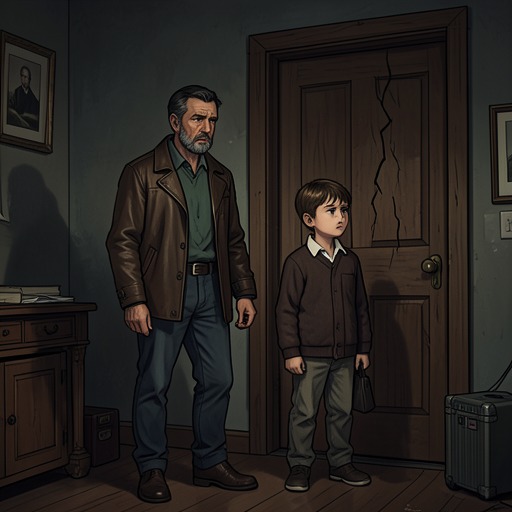
The announcement brings the crime close to Lukas: Herr Schiezeth looks at him, and Lukas avoids his gaze. The police invite anyone with information to come forward. Lukas considers whether confessing might bring a lighter punishment, but the investigation’s partial knowledge leaves him afraid that discovery is only a matter of time.
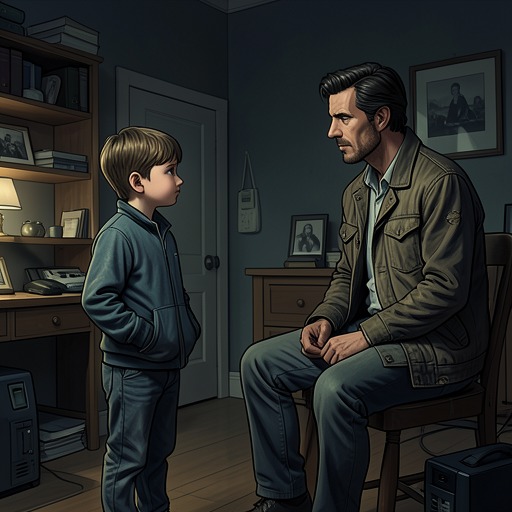
The story also shows the burglary moving beyond the school. Lukas’s father has read about it in the news and asks what happened. Lukas denies knowing more than what was reported, while protesting that theft and assaults occur at school regularly without attracting the same attention. He objects that the new computers, paid for with public money, become news almost immediately, whereas daily violence is not treated as equally noteworthy. His argument does not excuse the theft; it reveals the unequal visibility through which he understands the neighborhood and the school.
The Failed Sale and Significance
When the boys try to sell computers at a shop, the fresh stock and timing expose them. The shopkeeper connects their offer to a recent school burglary and throws them a newspaper with a front-page report identifying the Gesamtschule in der Gropiusstadt. The headline says that teaching computers worth 15,000 euros were stolen and the school was vandalized; a photograph shows the school’s main entrance. The article’s valuation and description are more specific than the officers’ initial account, and the newspaper turns the boys’ stolen goods into recognizable evidence. Julius tries to distance them from the crime, but the seller’s suspicion has already made their proposed sale untenable.
The episode’s central reversal is from apparent ease to exposure. At first, the new computers seem to offer quick money, and the key ring makes entry look simple. But the physical work of removing the equipment, the high fence, Julius’s weapon, the public account of three suspects, and the shopkeeper’s newspaper all narrow the gap between the boys and the authorities. The burglary also links criminal opportunity to its surroundings: an empty school at night and access to its keys enable the theft, while the volume and visibility of the goods make concealment and sale difficult. For Lukas, the school’s sudden public prominence sharpens a conflict already present in his life: the theft is treated as a major story, while the everyday violence he describes remains, in his view, easy for adults and the press to overlook.